How a Title IX process usually unfolds
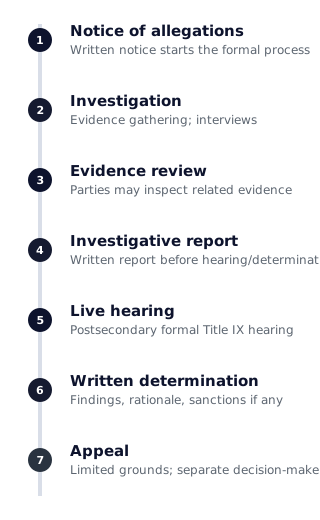
This is a map of a formal Title IX grievance process at a postsecondary school under the 2020 framework (as discussed in the book). Your institution’s policy can add steps, rename offices, or run a different rulebook entirely. Orientation only — not a prediction of your case.
What each stage is for
- Notice of allegations. Written notice that a formal process has started. Read it as a commitment about rules and deadlines, not as a verdict. Chapter 1.
- Investigation. Gathering of evidence and interviews. The burden of gathering evidence in a formal Title IX process sits with the school — that is not a promise it will find what helps you.
- Evidence review. Parties can typically inspect evidence directly related to the allegations before the investigative report is finalized. Deadlines matter; count them.
- Investigative report. A written report summarizing relevant evidence, shared before hearing or determination under the formal framework.
- Live hearing. Postsecondary formal Title IX processes generally include a live hearing with specific advisor and questioning rules. Outside Title IX, hearings can look very different.
- Written determination. Findings, rationale, and any sanctions. Read the reasons and note appeal deadlines.
- Appeal. Limited grounds; a different decision-maker. An appeal does not automatically pause every consequence.
Not legal advice. Check the policy version that governs your dates and conduct. Employee and student tracks can diverge. The full investigation, hearing, and evidence chapters are in the paid book.